Dunblane has long been a place where environmental awareness is not just discussed, but actively lived. From community groups to independent businesses, there is a shared sense that small, thoughtful actions can ripple outward into meaningful change. Within that landscape, the craft school at Craft Central has developed a clear and steady mission: to inspire more sustainable ways of living through the continuation and evolution of practical craft skills.
At its core, the school is built on a simple idea. When people know how to make, mend and understand the materials around them, they make different choices. They value objects differently. They waste less. Craft becomes more than a pastime, it becomes a tool for living more responsibly.
That thinking runs through everything the school does, not just in what is taught, but in how the space operates day to day. The studio was intentionally based on Dunblane High Street, within easy reach of public transport, making lower impact travel the default for many visitors. Behind the scenes, systems have been put in place to reduce waste and rethink resources:
- Earlier this year we completed extensive interior renovation work, switching lighting and heating systems to more sustainable systems with the help of Stiling Council’s premises Improvement grant.
- Food waste is composted on site using a Sub-Pod wormery, feeding both indoor plants and outdoor planters.
- Eco cleaning products are sourced through a local refill shop, Weigh Ahead, cutting down on single-use packaging.
- Every year we participate in Dunblane Eco-Fest – staging a special selection of sustainability focussed workshops to support this town-wide initiative to raise awareness of environmental issues.
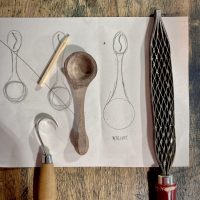
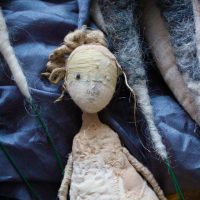
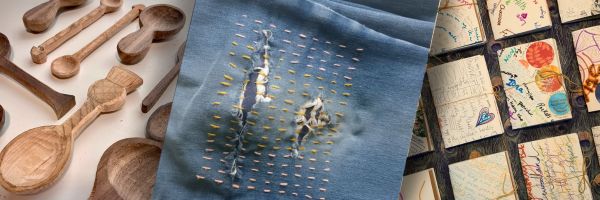
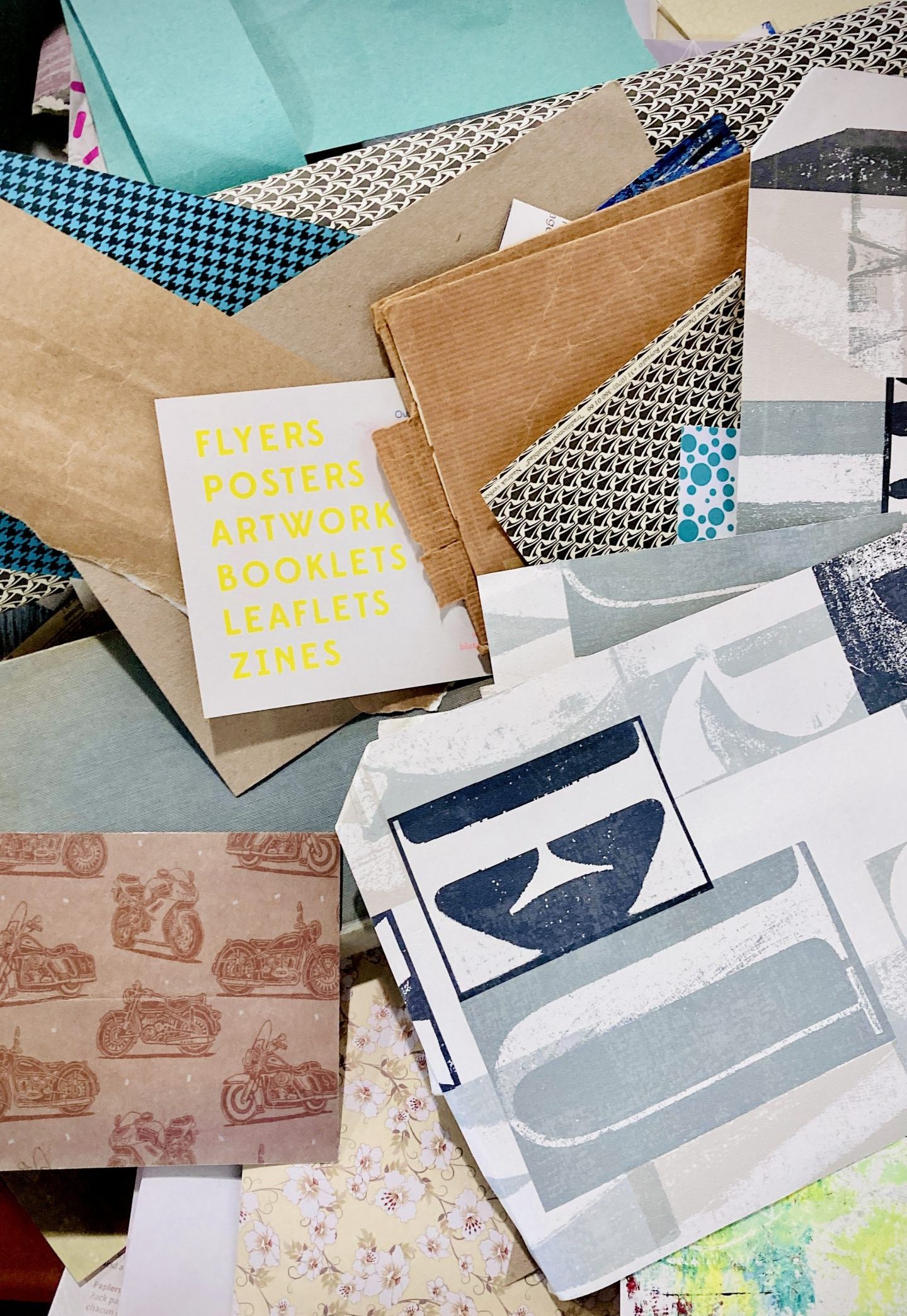
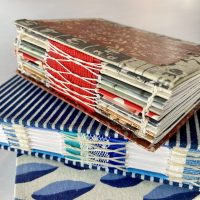
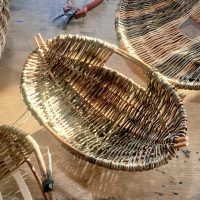
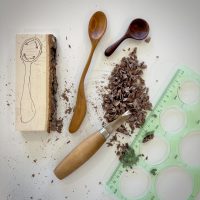
These choices are not presented as grand gestures, but as practical, repeatable actions. They reflect the same mindset that underpins the teaching programme: sustainability is most powerful when it is embedded into everyday habits. The workshops themselves are designed with that in mind. Rather than focusing purely on finished objects, they centre on skills that help people rethink their relationship with materials. Participants might learn how to bind books with Cass Barron, using reclaimed paper, extending the life of materials that would otherwise be discarded. They might explore visible mending techniques with Eilidh Weir, transforming worn clothing into something both functional and expressive, rather than replacing it. Or they might work alongside Louise C Forbes using sustainably sourced local wood, shaping it by hand into beautiful carved spoons, gaining a deeper understanding of the material and its origins in the process. Our basket weaver – Anna Liebmann takes locally sourced materials to the next level by growing her own! In the spring you’ll find her alongside friends in her willow patch, harvesting the year’s crop while tending and preparing the beds for the next.
Across all of these areas, the aim is consistent: to equip people with the confidence and knowledge to make considered choices. Repair instead of replace. Reuse instead of discard. Value process as much as outcome.
In a world where environmental challenges can often feel abstract or overwhelming, this approach keeps things grounded. It brings sustainability back to a human scale, where change begins with what we make, how we care for it, and how long we choose to keep it in use.
Through this combination of practical action and skill sharing, the craft school continues to play its part in shaping a more environmentally aware future for Dunblane. Not through quick fixes or one-off initiatives, but through the quiet, lasting impact of knowledge passed from one pair of hands to another.
Showing 7–12 of 16 resultsSorted by latest
Across all of these areas, the aim is consistent: to equip people with the confidence and knowledge to make considered choices. Repair instead of replace. Reuse instead of discard. Value process as much as outcome.
In a world where environmental challenges can often feel abstract or overwhelming, this approach keeps things grounded. It brings sustainability back to a human scale, where change begins with what we make, how we care for it, and how long we choose to keep it in use.
Through this combination of practical action and skill sharing, the craft school continues to play its part in shaping a more environmentally aware future for Dunblane. Not through quick fixes or one-off initiatives, but through the quiet, lasting impact of knowledge passed from one pair of hands to another.